
Service 06 · Inspection & Investigation
Forensic Engineering
Investigating failures, damage and defects — establishing cause, extent and remedy.
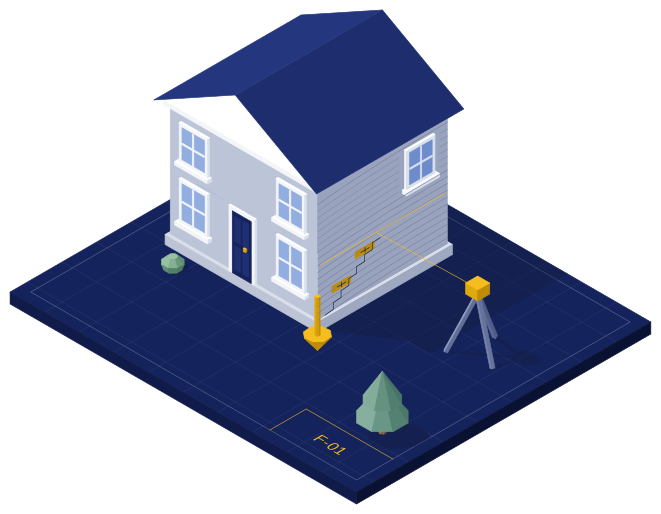
When something has cracked, settled, leaked or failed, the useful questions are why it happened, how far it goes, whether it is still moving and what it takes to fix. Forensic engineering answers those in a form that holds up to scrutiny.
When to call a forensic engineer
A forensic engineer investigates why a building, or part of one, has failed, and documents the answer so that others can rely on it. Owners, insurers, attorneys and contractors across Long Island and New York City typically call one when:
- Cracks, sloping floors or bowing walls are new, or are getting worse.
- A storm, fire, flood, fallen tree or vehicle has damaged the structure.
- Water keeps getting in and the source has not been found.
- Recent construction has gone wrong and the parties disagree about the cause.
- An insurance claim or a dispute needs an independent, sealed opinion on cause and extent.
What an investigation involves
It starts with the history: when the problem first appeared, what has changed since, what repairs have already been tried, and whatever drawings, permits and photos exist. Then the site — the damage itself and the structure around it, because the visible symptom is often some distance from its cause. A crack over a doorway can start at a footing; a sagging floor can trace back to a joist cut two rooms away; a stained ceiling can come from a flashing detail on the roof above.
Where the answer is not visible, it gets measured. Crack widths and patterns are mapped, floors and walls are checked for level and plumb, moisture readings are taken, and where it is needed a small opening or a test pit exposes the structure itself. Openings are agreed with the owner beforehand and kept to what the question requires.
Is it still moving?
In most cracking and settlement cases the deciding question is whether the movement is historic or active. A crack that opened decades ago as the house settled, and has not changed since, is a cosmetic repair. One that is still widening is a structural problem, and patching the finish without dealing with the cause only resets the clock.
That is measured rather than guessed: monitors fixed across the crack and read over weeks or months, level readings repeated, and the trend decides the remedy. Where a decision cannot wait for a monitoring period, the report states what is known now and what the monitoring is expected to confirm.
What the report gives you
Three answers in plain terms: what caused the damage, how far it extends, and what a proper repair involves. Observations are kept separate from conclusions, the basis for each conclusion is stated, and anything that could not be confirmed without further investigation is identified as such. That structure is what lets an insurer, an attorney or the other side of a dispute test the findings and rely on them.
When the remedy is a structural repair, the repair design and the drawings for the permit come out of the same investigation. If the repair needs a permit, the building department reviews those drawings, and the report usually travels with them.
What to have ready, and how long it takes
Access to the affected areas and the spaces above and below them; photos that show when the damage appeared or how it has changed; earlier reports, repair invoices, and any correspondence with an insurer, a contractor or a neighbor. For a claim or a dispute, include the policy or contract language in question and any deadlines — they shape both the scope and the timing.
A single visit for a defined problem is quick, and the report follows once the findings are worked through. Investigations that need monitoring, testing or openings take as long as those steps require, and that schedule is set out at the start.
Scope
- Failure and defect investigation
- Crack mapping, monitoring and movement assessment
- Settlement and foundation distress analysis
- Water intrusion and envelope failure investigation
- Storm, fire and impact damage assessment
- Construction defect evaluation
- Expert reporting and documentation
Who we work with
Owners, insurers, attorneys, property managers and buyers dealing with damage or a dispute.
Where we deliver this
Across Nassau, Suffolk, the East End and all five boroughs. Most requested in:
Related services
Related guides
Common questions
The crack has been there for years. Is it a problem?
Age alone does not answer it. Whether it is still moving does, and that is measurable.
How long does an investigation take?
A site assessment is quick. Where movement needs monitoring over time, the schedule reflects that.