
SUFFOLK COUNTY
Engineering & Permitting in Babylon
Engineering and filings across the Town of Babylon and its villages, where south shore flood exposure sets much of the scope.
Babylon covers town-administered areas and three incorporated villages — Babylon, Lindenhurst and Amityville — each with its own building department. As everywhere on Long Island, which one holds the file is the first thing established, and the mailing address does not settle it.
The canals set the engineering
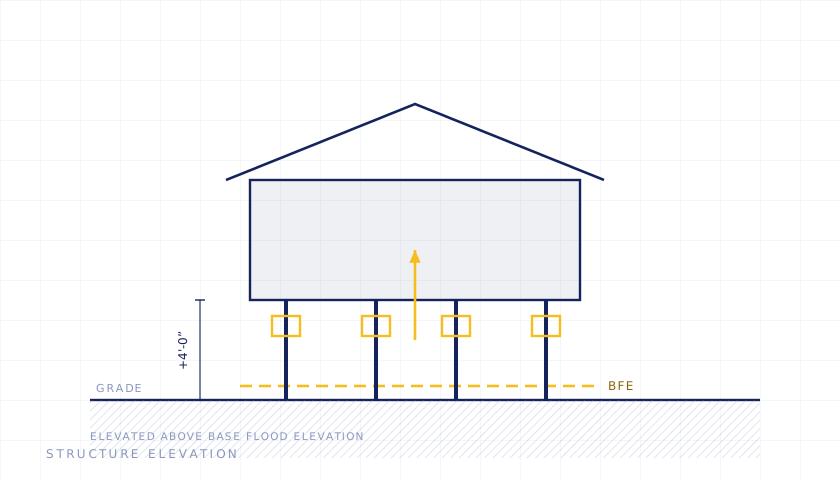
The south of the town is canal-front and low-lying through West Babylon, Lindenhurst, Copiague and Amityville, and a large share of it is mapped in special flood hazard areas. The consequences run through the whole design: lowest floor elevation and freeboard, flood venting or open foundations depending on zone, mechanical and electrical equipment set above the design flood elevation, and breakaway construction where enclosure below elevation is permitted at all.
The corridor also carries a long tail of post-2012 repair and reconstruction that was never filed. It is common for a property here to have had substantial work done, sometimes with grant funding, with nothing in the municipal record to show for it.
Sanitary review is a Suffolk issue
This is where Suffolk diverges sharply from Nassau. Much of the town is served by the county sewer district, but where a property is not, the Suffolk County Department of Health Services reviews the sanitary arrangement, and that review is frequently the item that sets the schedule rather than the building department. Where an upgrade is required, current county policy pushes toward advanced treatment systems rather than conventional replacement, and that has cost and site-layout consequences that are better identified at the start than midway through.
Recurring work
- House lifting and foundation replacement on canal-front property
- Structural and flood design for additions on elevated or partially elevated houses
- Legalizing post-storm reconstruction that was never permitted
- Decks, docks, bulkhead-adjacent structures and the permits behind them
- Commercial work along Sunrise Highway and Montauk Highway
Filing in Babylon and its villages
Babylon covers town-administered areas plus the villages of Babylon, Lindenhurst and Amityville, each with its own department. Jurisdiction first, as always.
The item that most often sets the program here is sanitary. Much of the town sits within the county sewer district and much does not, and on an unsewered parcel the county health department reviews the sanitary arrangement alongside the building department — usually taking longer. Confirming sewer status at the outset is the difference between a realistic schedule and an optimistic one.
On canal-front and low-lying property the flood provisions apply as well, which adds elevation, foundation type and equipment height to what the submission has to demonstrate. Where post-2012 reconstruction was never filed, the record has to be reconciled before new work is approved.
We prepare and file with these departments. We are not the department, and nothing here is an official municipal source — confirm current requirements with the authority itself.
Services most used in Babylon
- House Lifting & Flood Elevation
- Structural Engineering
- Legalizations
- Storm & Insurance Damage Assessment
- Violations, Open Permits & Compliance
- Civil & Site Engineering
- Additions & New Construction
- Property File Review
Common questions about Babylon
Is my property in the Town of Babylon or in a village?
It has to be checked. Babylon, Lindenhurst and Amityville are incorporated villages with their own building departments and codes; everything else falls to the Town. The zoning analysis differs between them, so this is settled before design.
Does a septic upgrade have to go through the county?
Where a property is not on the sewer district, yes — the Suffolk County Department of Health Services reviews the sanitary arrangement, and that review runs alongside and often longer than the building department review. It is worth confirming sewer status early because it materially changes the program.
The house was rebuilt after Sandy but nothing was filed. What now?
The work is measured and documented, tested against the flood provisions and current code, and filed to close the record. Whether it can be filed as-is or needs modification depends mainly on elevation and foundation type. A property file review plus a site visit will tell you which.
Related guides
- Engineering & permitting across Suffolk County
- Long Island building departments: who holds your file
- Flood zones and house lifting
- What an open permit is, and how it gets closed
- What to do when you get a violation
- Pool permits on Long Island
Getting started
The first step is establishing which department holds the file and what the municipal record actually shows. That is one conversation, and it usually changes what the project looks like.
Scope and pricing confirmed before work begins.